
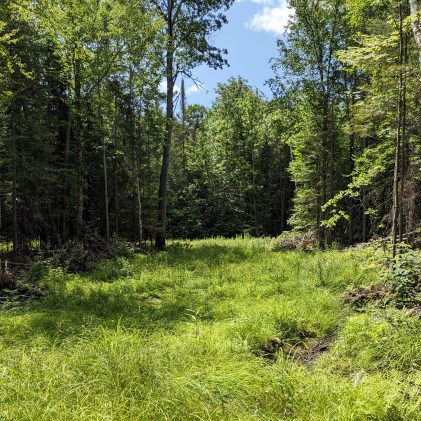
On December 13, 2023, a pivotal session was conducted, drawing together various stakeholders to discuss and advance the development of a Forest Management Plan (FMP) for a collaborative project selected by Colleges and Institutes Canada as one of 10 living labs. This session, led by Jesse Russell and Elliott Groen, featured participants from multiple sectors, including educational institutions like Canadore College and Nipissing University, community members, and environmental experts. Key highlights of the session included:
- A thorough project refresher, emphasizing the project’s scope and its selection as a national living lab.
- Detailed discussions on forest inventory data collection, carbon sequestration measurement methodologies, and the integration of these activities with academic curricula and community engagement.
- Initiatives aimed at increasing tree counts across campus locations and developing a comprehensive 10-year forest management plan aimed at achieving Forest Stewardship Council (FSC) certification.
- The engagement and participatory approach towards crafting the FMP, including ice breaker activities, detailed presentations on draft objectives, and the connection of field data to management activities.
- A focus on sustainable management practices, exploring economic objectives beyond monetary gains, and aligning the project’s goals with FSC standards and UN Sustainable Development Goals.
The session underscored the collaborative effort to not only address environmental sustainability but also enhance educational outcomes and community well-being through the project. Stakeholders from various backgrounds contributed to a rich discussion on the future direction of the forest management plan, setting the stage for continued engagement and development.
In conclusion, the December 13 session represented a significant step forward in the collaborative effort to develop a Forest Management Plan that aligns with sustainable management practices, educational goals, and community well-being. The involvement of diverse stakeholder groups, from academic institutions to community members, underscores the project’s holistic approach to forest management. Moving forward, the insights gathered from this session will be instrumental in shaping the FMP, ensuring it not only meets certification standards but also serves as a model for integrating environmental sustainability with educational and community objectives.
00:00 – 03:50 | Land Acknowledgement, Project Summary/Refresher
- Recording Notice: Session is recorded, to be shared with registrants.
- Project Introduction: For new participants, an overview of the project chosen by Colleges and Institutes Canada as one of 10 living labs.
- Activities Overview:
- Chris from Mi6 and Elliott lead forest inventory data collection and mapping for forest health, structure, and composition.
- Elliott employs a “boots on the ground” method for measuring carbon sequestration rates.
- Academic and Community Integration: Efforts to tie project activities with academic programs, departments, and community involvement.
- Tree Count Increase: Initiatives to raise the number of trees on campus locations.
- Forest Management Plan: Goal to develop a 10-year plan for FSC certification.
- Story Development: Vanessa assists in creating a narrative through interviews, aiming to raise awareness of forest management importance.
- Information Sharing: Mention of sharing a link to the project page in the chat for updates and details.
03:50 – 08:19 | FMP Engagement Session Ice Breaker and Purpose
- Ice Breaker: Elliott Groen starts with a fun identification exercise involving plants and natural features shown on a screen, engaging participants and setting a collaborative tone.
- Introduction to FMP: Elliott transitions to discussing the Forest Management Plan (FMP), emphasizing its purpose to integrate actual forest conditions with the college’s activities through ongoing observation and adaptation.
- Framework Overview: A preliminary framework for the FMP is outlined, aiming to:
- Connect detailed environmental inventories with broader, landscape-level collaborations.
- Foster partnerships with Canadore College, Nipissing University, and others in the Duchesnay Creek Watershed.
- Certification Goals: The FMP is being developed to meet the standards necessary for certification by the Forest Stewardship Council (FSC), linking to a network of forestry practitioners and adhering to sustainable management principles.
- Engagement and Collaboration: Elliott highlights previous and ongoing efforts to engage with stakeholders and outlines plans for focused discussions on specific aspects of the FMP, setting the groundwork for collaborative development and implementation.
08:19 – 10:26 | Engagement Overview and Current Status
- Engagement Summary:
- Elliott recounts the engagement activities and milestones from March 2023 to date, including snowshoe surveys, meetings with the sustainable team, and crafting a proposal.
- Key events include the project opening in July, inventory commencement, an engagement session in August, and various interactions with students, staff, and professors.
- Recent and Upcoming Activities:
- A National Tree Day planting event in September marked a notable achievement.
- Ongoing living lab project meetings and student involvement in inventory work highlighted the collaborative nature of the project.
- Current Phase:
- January 2024 is slated for another engagement session.
- Drafting of the forest management plan is scheduled for February and March, with a community resiliency fair and the presentation of a carbon report from the inventory work also planned.
- The completion of the living lab project, including the delivery of a 10-year forest management plan, is expected by the end of April 2024.
- Looking Forward:
- Proposed meetings and information sharing structures are in place for the next steps, emphasizing informal and formal engagement opportunities.
- Elliott encourages participants to contribute their knowledge and insights as the project moves towards finalizing the forest management plan.
10:26 – 15:42 | Next Steps, Office Insights, and Draft Objectives
- Upcoming Steps and Engagement:
- Elliott outlines a structured approach for the next phases, emphasizing both informal and formal means of collaboration and knowledge sharing leading up to the drafting of the forest management plan.
- Formal meetings are planned for the last two weeks of January, aiming for productive discussions on proposed topics and objectives.
- Elliott’s Office Glimpse:
- A photo of Elliott’s office, set amidst his fieldwork environment, underscores the hands-on and immersive nature of the project. It represents the collaborative and participatory approach desired in developing the forest management plan.
- Draft Objectives for Forest Management:
- Silviculture Objective: To maintain and enhance forest health and diversity, highlighting the art and science of forest management.
- Social Objective: To offer recreational and wellbeing opportunities like cross-country skiing and forest bathing, enhancing community wellbeing.
- Educational Objective: Integrating the curriculum to generate knowledge and skills beneficial to communities, using the forest as a living lab for hands-on learning.
- Economic Objective: Exploring and defining value flows beyond monetary gains, focusing on sustainable resource management and community benefits.
- These objectives are aligned with internal visions and strategies, FSC standards, and UN Sustainable Development Goals, ensuring a holistic and sustainable approach to forest management.
15:42 – 22:27 | Field Notes, Data Collection, and Activity Connections
- Field Notes and Data Overview:
- Elliott discusses data and observations from field work, including soil, flora, and fauna assessments.
- Highlights include detailed evaluations of forest conditions such as understory species, tree health, and regeneration.
- Data Insights:
- Observations reveal a young forest condition, with a mix of species like white birch and large tooth aspen, and a developing understory of red and sugar maple as well as balsam fir.
- The forest is described as being in a stem exclusion phase, dense with trees, which will eventually thin out as it matures.
- Connecting Observations to Management Activities:
- Elliott links field observations to potential forest management activities, emphasizing the role of continuous observation in adaptive management.
- Strategies discussed include trail maintenance and design, integrating educational curricula with forest management, and leveraging forest resources like firewood and non-timber forest products.
- Operational Frameworks:
- Introduces operational frameworks for managing activities, such as a trail framework that includes rules, responsibilities, and resource management.
- Discusses how these frameworks support both the physical management of the forest and its integration into educational and community activities.
- Economic and Ecological Objectives:
- Explores how forest management can support economic objectives without compromising ecological integrity.
- Examples include sustainable firewood harvesting and the cultivation of medicinal mushrooms as part of a broader value flow within the forest management plan.
22:27 – 24:53 | Forest Management Plan Example
- Invasive Species Management:
- Elliott discusses incorporating strategies for managing invasive species, such as garlic mustard, into the forest management plan. This includes the right and responsibility of management, emphasizing community and student involvement in removal efforts.
- Best Practices and Monitoring:
- Emphasizes following best management practices and science for invasive species removal. A guide published by the Invasive Species Center and the Government of Ontario is highlighted as a resource.
- Reporting and Tracking:
- Describes a reporting system for invasive species management efforts, using a compartment-based approach for easy identification and monitoring. This system will allow for tracking progress over the 10-year period of the forest management plan.
- Overall Plan Integration:
- Elliott’s presentation serves as an example of how specific management activities, like invasive species removal, fit within the broader objectives of the forest management plan, demonstrating the plan’s comprehensive approach to sustainable forest management.
In conclusion, the December 13 session represented a significant step forward in the collaborative effort to develop a Forest Management Plan that aligns with sustainable management practices, educational goals, and community well-being. The involvement of diverse stakeholder groups, from academic institutions to community members, underscores the project’s holistic approach to forest management. Moving forward, the insights gathered from this session will be instrumental in shaping the FMP, ensuring it not only meets certification standards but also serves as a model for integrating environmental sustainability with educational and community objectives.